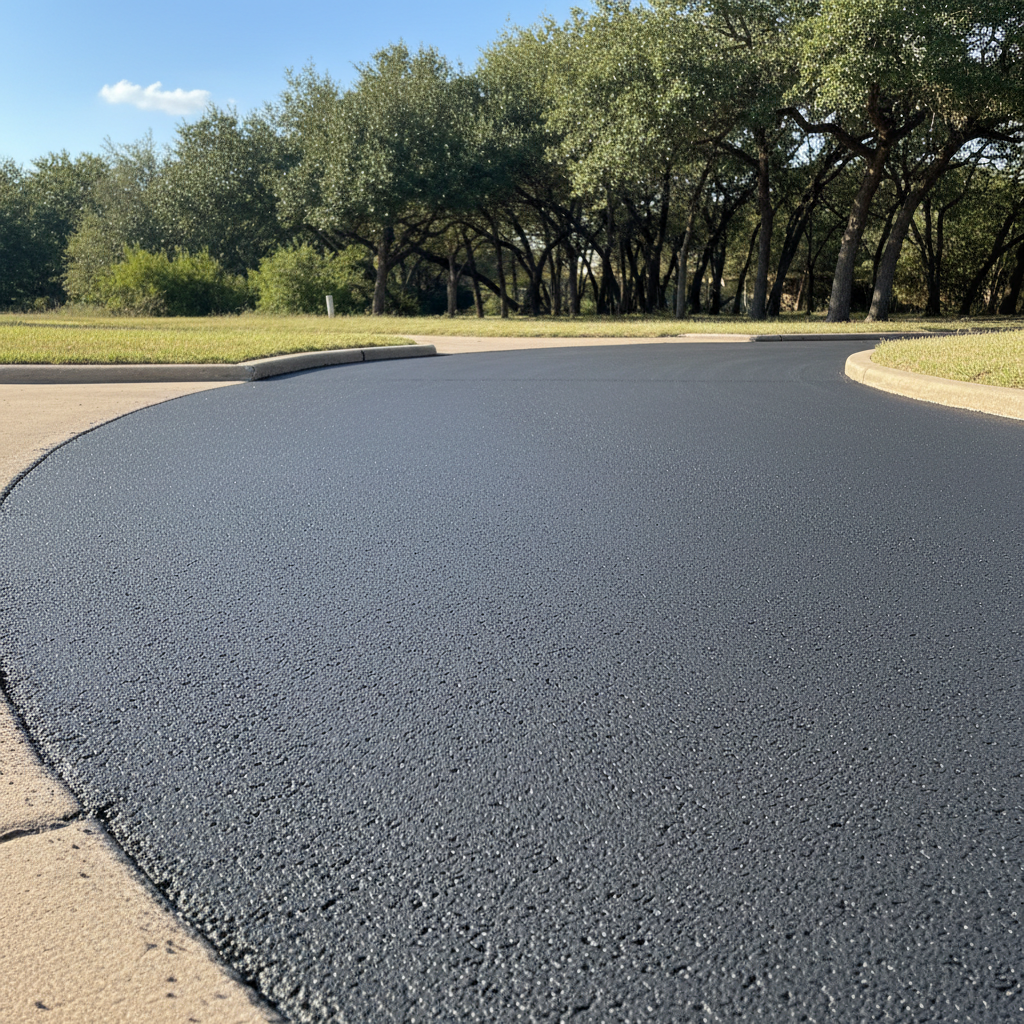
Alright, let's talk about slurry seal. I get a lot of questions about this stuff, and honestly, there's a bunch of wrong information floating around. It's not some magic fix-all, but it's super important for keeping your asphalt in good shape and making it last longer. If you've got an asphalt driveway, you've probably heard the term, or maybe you're just wondering if it's the right move for your place. Here are the real answers to the questions I hear most often from folks right here in Irving.
What exactly is slurry seal, and how is it different from sealcoating?
This is probably the most common question I get asked. Think of sealcoating as a thin, protective paint job for your asphalt. It's usually a liquid mix of asphalt emulsion, water, and some extra stuff. It's great for blocking UV rays and keeping water out, but it doesn't really add much strength to the pavement itself.
Slurry seal, on the other hand, is a much thicker, tougher mixture. It's a blend of asphalt emulsion, finely crushed rock (we call those aggregates), water, and some chemical additives. Because it has those aggregates in it, it actually fills in tiny cracks and small holes, makes the surface feel better, and puts down a brand new wearing layer. It's like adding a thin, new layer of asphalt on top, but without the huge cost of a full overlay. It's a significant step up from just a sealcoat when you think about what it can fix and how long it holds up.
When's the best time of year to put down slurry seal in Irving?
Timing is everything with this stuff, especially with our Texas weather, wouldn't you agree? You need steady warm temperatures, but not super hot, and definitely no rain. Ideally, we're looking for daytime temperatures that consistently stay above 50°F (and really, above 60°F is even better), with night temperatures that don't drop too far below that. You also need a dry forecast for at least 24 to 48 hours after we apply it.
For us here in Irving, that usually means late spring (April-May) or early fall (September-October) are your best bets. Summer can get way too hot, which can make the material dry too fast and cause problems. And winter, well, it's obviously too cold and wet. We get those hot, humid summers, and you really don't want to be doing this when it's 100 degrees out. The material needs to cure properly, and extreme heat or sudden cold snaps can really mess with that whole process.
Can slurry seal fix big cracks or potholes?
No, absolutely not. This is a huge misunderstanding. Slurry seal is for preventative maintenance, not for fixing major damage. It's designed to protect asphalt that's already healthy, fill in very small hairline cracks, improve the surface texture, and bring back that nice black look.
If you've got cracks wider than about a quarter-inch, or any potholes, alligator cracking (those interconnected cracks that look like an alligator's hide), or spots where the asphalt is crumbling, those need to be repaired correctly *before* any slurry seal goes down. We're talking crack filling, patching, or even replacing whole sections. Putting slurry seal over significant damage is like slapping a band-aid on a broken leg – it won't hold, and you'll just be throwing your money away. We'll always inspect your driveway first, just to make sure it's a good candidate for the treatment.
How long does slurry seal typically last on a residential driveway?
Generally speaking, a good quality slurry seal application, done the right way, should last you anywhere from 5 to 7 years on a residential driveway. Now, that's assuming a few things: the original asphalt was in pretty good shape, we applied it correctly, and you're not driving heavy machinery over it every single day. Things like how much traffic it gets, how well it drains, and even how much direct sunlight your driveway sees can all affect its lifespan. Here in Irving, with our intense sun exposure, that UV protection is a really big deal, and a good slurry seal helps a ton. Regular maintenance, like keeping it clean and fixing any new small cracks quickly, can also help it last even longer.
What's the typical process for applying slurry seal, and how long until I can use my driveway?
First off, preparation is critical. We'll clean the surface thoroughly – sweeping, blowing, and sometimes even power washing to get rid of all the dirt, debris, and loose gravel. Any big cracks or potholes will be pre-treated or repaired. Then, we spread the slurry seal mixture evenly across the entire asphalt surface. We usually do this with special equipment that mixes and spreads the material all in one pass.
Once it's down, it needs time to cure. You typically need to stay off the driveway for at least 24 to 48 hours. Sometimes longer if it's humid or cooler than ideal outside. We'll give you a specific timeframe based on the conditions on the day we apply it. It's really, really important to respect that curing time. Driving on it too soon can leave tire marks, pull up the material, and mess up the integrity of the seal. We've seen it happen, and it's a pain for everyone involved.
Is slurry seal an environmentally friendly option?
Compared to some other asphalt treatments, yes, you could say it's a more environmentally friendly choice. Slurry seal uses asphalt emulsion, which is water-based. This means it has fewer volatile organic compounds (VOCs) than some older, solvent-based sealants. Plus, by making your existing asphalt last longer, you're delaying the need for a full replacement. That means less new material needs to be produced and less waste ends up in landfills. It's all about getting the most life out of what's already there, which is good for your wallet and, frankly, good for the planet. We're always trying to be more efficient and responsible at All Star Paving, and using quality materials that last is a big part of that.
Why should I choose slurry seal over just letting my asphalt age naturally?
Look, asphalt is tough, but it's not indestructible. The sun's UV rays, water getting in, and everyday traffic all take their toll. Over time, asphalt oxidizes – meaning it loses its flexibility and oils, becoming brittle and gray. That's when cracks start to show up, and once water gets into those cracks, it's a fast slide to potholes and major deterioration. Slurry seal acts like a protective shield.
It puts back those lost oils, seals up those tiny cracks before they turn into big problems, and gives you a fresh, durable surface. It's like putting sunscreen on your skin or a fresh coat of paint on your house. It prevents expensive repairs down the road and keeps your property looking sharp. For the cost, it's one of the best investments you can make in your asphalt driveway's longevity. You wouldn't skip oil changes on your car, right? Think of slurry seal as essential maintenance for your driveway.