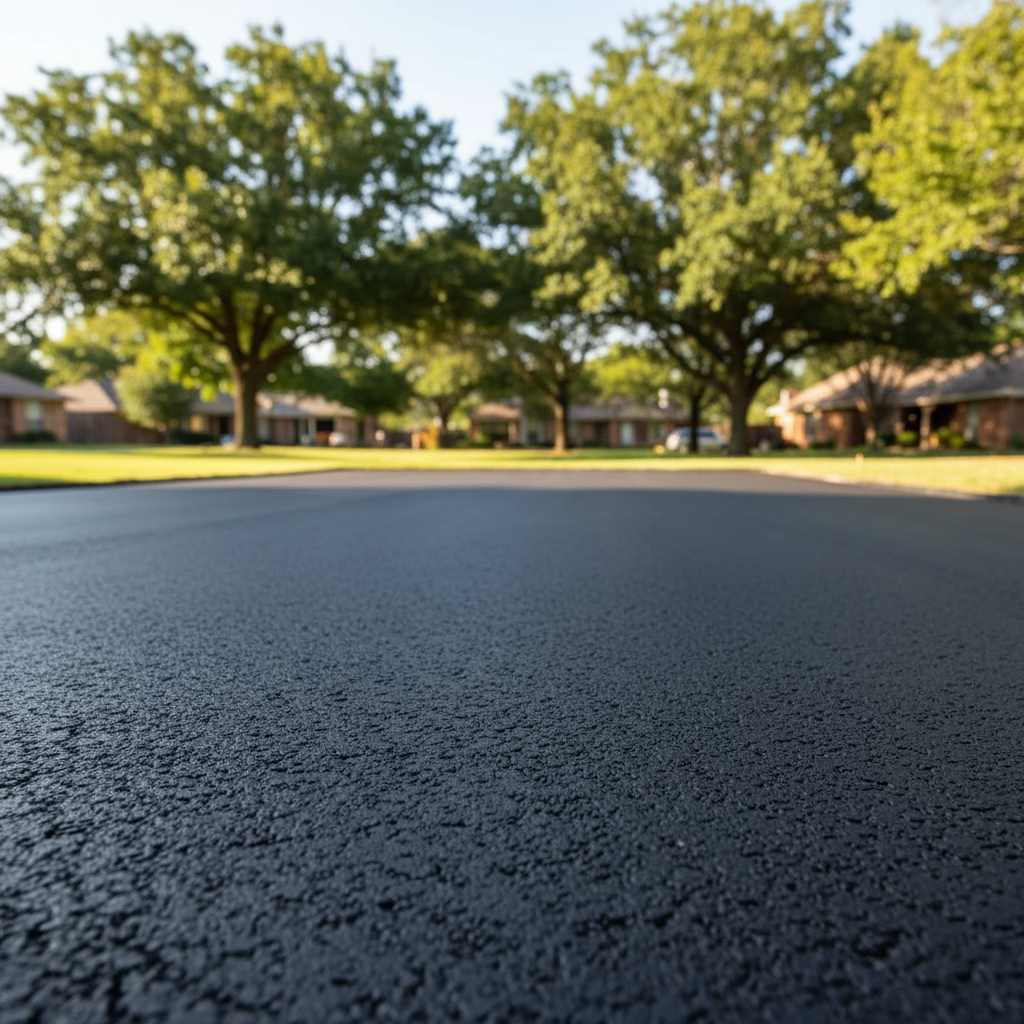
Alright, let's talk commercial asphalt. I get a ton of calls from business owners and property managers around Irving, and some questions just keep popping up. That's totally understandable; your parking lot or access roads are a really big deal for your business. They're the first thing customers see, after all, and they absolutely need to be safe and work right.
You're not just dealing with a simple driveway here. You've got heavier traffic, more wear and tear, and usually much bigger areas to keep up. So, let's dig into some of those common questions you might have.
How often should I really sealcoat my commercial parking lot?
This is a big one, and you'll hear different answers from different folks. For a commercial lot right here in Irving, with our scorching summers and those occasional heavy rains, I generally tell people to sealcoat every 2-3 years. Now, that's a guideline, not some ironclad rule. If your lot sees super heavy truck traffic – like a distribution center or a really busy retail plaza – you might need it closer to every two years. But if it's a smaller office building with lighter car traffic, you could probably stretch it to three. The main thing is to watch for wear: fading, little cracks starting, or the aggregate (the small stones) beginning to show through. Sealcoating isn't just about making things look good; it actually protects your investment from UV rays, water seeping in, and oil spills. If you skip it too long, your asphalt just breaks down faster, and that means way more expensive repairs down the road.
What's the deal with drainage on my commercial property? Why does it matter so much?
Drainage is absolutely critical for commercial asphalt, maybe even more so than for residential. Think about it: you've got larger paved areas, often with more complicated layouts, and way more water runoff during our Texas thunderstorms. Poor drainage, hands down, is the number one enemy of asphalt pavement. Standing water softens the sub-base underneath, which then weakens the asphalt itself, leading to potholes, cracks, and eventually, the whole pavement failing. I've seen countless lots in places like Las Colinas where water just pools against curbs or in low spots, and those are always the first places to develop serious problems. When we're designing or repairing a commercial lot, we're always looking at slopes, catch basins, and proper grading to make sure water gets off the surface fast. If you've got standing water after a rain, that's a huge red flag you really shouldn't ignore.
My parking lot has a bunch of cracks. Can they all be repaired, or do I need to repave?
It really depends on the type and how bad the cracking is. For isolated, smaller cracks – say, less than a quarter-inch wide – crack filling usually does the trick. We clean them out really well and then fill them with a hot rubberized sealant. This stops water from getting in there and making the crack bigger. Now, if you've got alligator cracking (that pattern of interconnected cracks that looks like alligator skin) spread over a big area, that usually points to a deeper structural issue with the sub-base. In those cases, crack filling is honestly just a temporary fix. You're probably looking at a more extensive repair like a patch, milling and overlay, or even full-depth reconstruction for that section. We'd need to check out the sub-base to figure out the best long-term solution. Seriously, don't just ignore alligator cracking; it's a clear sign your pavement is failing.
How long does a commercial asphalt parking lot typically last?
With proper installation and regular maintenance, a commercial asphalt parking lot can easily last 15-20 years, sometimes even longer. But that's the big catch: 'proper installation and regular maintenance.' If the initial base wasn't prepared correctly, or if you skip out on sealcoating and crack filling, you'll start seeing problems much sooner, maybe within 5-10 years. Our local weather, with those wild temperature swings, also plays a role. The sun, heat, and occasional freezes put a lot of stress on the pavement. Think of it like your car; if you never change the oil or rotate the tires, it won't last as long, right? Same deal with your parking lot.
What's the difference between an overlay and full-depth replacement? When do I need which?
An overlay, sometimes called resurfacing, is when we mill off the top layer of your existing asphalt (usually 1.5 to 2 inches) and then put down a new layer of asphalt over the remaining base. This is a great option if your pavement has surface-level issues like widespread cracking, minor rutting, or general deterioration, but the stuff underneath is still solid. It's more cost-effective and causes less disruption than a full replacement. Full-depth replacement, on the other hand, means we rip out all the existing asphalt and often part of the sub-base, then rebuild the entire pavement structure from the ground up. You need full-depth replacement when the base itself has failed – you're seeing severe potholes, extensive alligator cracking, or major structural issues that an overlay just can't fix. It's a bigger job, for sure, but sometimes it's the only way to get a lasting solution.
Can I keep my business open during asphalt work?
Most of the time, yes, you can. We get it — closing your business isn't an option for most people. For smaller jobs like crack filling or minor patching, we can often section off areas and work around your operating hours. For bigger projects like sealcoating or an overlay, we'll sit down with you to create a phasing plan. This means we'll do one section of the lot at a time, allowing customers to still get into your business through other areas. We'll put up clear signs and barricades to guide traffic and keep everyone safe. Communication is key here, you know? We'll talk about your specific needs and come up with a schedule that causes the least amount of trouble for your customers and employees. We do this all the time for businesses right here in Irving, from retail centers to industrial parks. It's all about careful planning and execution.
Hopefully, that clears up some of your questions about commercial asphalt. It's a big investment for your business, and you want to make sure it's done right and kept up properly. If you've got more questions or want us to take a look at your lot, give All Star Paving a call. We're always happy to help.