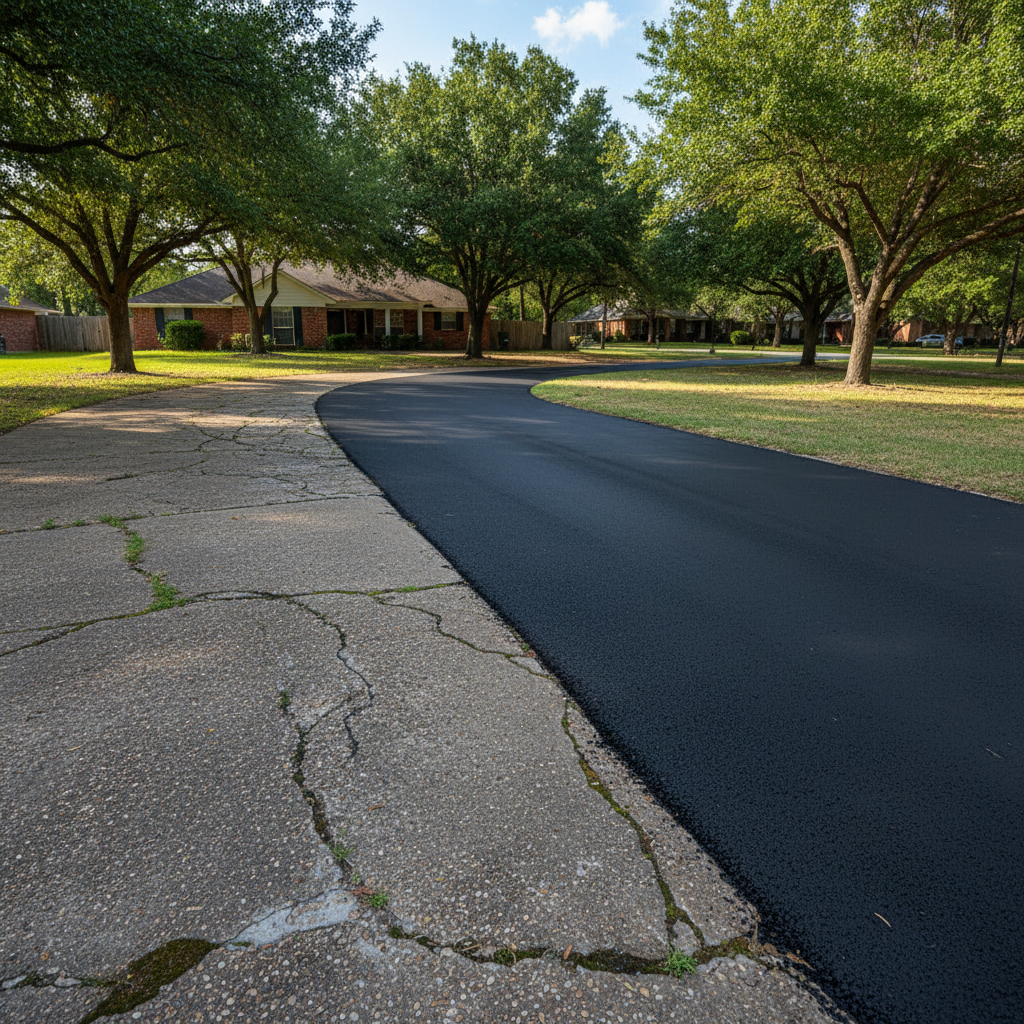
Your asphalt driveway is looking pretty rough, huh? Maybe it's got more cracks than a spiderweb, or those potholes are starting to look like small craters. When it gets to that point, you've generally got two main options: an asphalt overlay or a full replacement. As a contractor who's seen a lot of driveways here in Irving, I can tell you there's a time and a place for both.
What's an Asphalt Overlay?
Think of an overlay like putting a fresh coat of paint on a wall, but for your driveway. We're talking about adding a new layer of asphalt – usually an inch or two thick – right over your existing, damaged pavement. Before we do that, though, we've gotta prep the surface. That means cleaning it thoroughly, filling any major cracks or potholes, and sometimes applying a tack coat to help the new layer stick. It's a popular choice because it's generally quicker and less disruptive than ripping everything out.
What's a Full Asphalt Replacement?
This one's pretty straightforward: we tear out all the old asphalt, haul it away, and then build a brand-new driveway from the ground up. That includes re-grading the sub-base (the dirt underneath), laying down a fresh aggregate base layer, and then paving with new asphalt. It's a more extensive job, takes longer, and obviously costs more upfront.
Cost: The Bottom Line
Let's be real, cost is usually the first thing folks ask about. An overlay is almost always going to be cheaper than a full replacement. You're using less material, and there's a lot less labor involved in tearing out and hauling away old pavement. If your budget is tight, and your driveway's underlying structure is still sound, an overlay can be a great way to get a fresh look without breaking the bank.
Durability & Lifespan
This is where things get a bit more nuanced. An overlay can add another 7-15 years to your driveway's life, assuming the base underneath is in decent shape. The new layer will protect the old one and give you a smooth surface. However, if the problems in your old driveway go deeper – like a failing sub-base or significant structural issues – those problems can eventually telegraph through the new overlay. It's like putting a bandage on a broken bone; it might look better, but the underlying issue is still there.
A full replacement, on the other hand, gives you a completely new foundation. When done right, with proper compaction and drainage, you're looking at 15-25 years, sometimes even more, especially with our hot Texas sun and the clay soils we often deal with around here in Irving. You're essentially resetting the clock.
Maintenance Requirements
Both options benefit from regular maintenance, like sealcoating every 2-3 years and prompt crack filling. For an overlay, you'll want to be extra vigilant about addressing any cracks that reappear quickly, as they could be signs of deeper issues coming through. For a full replacement, good maintenance just helps you get the maximum lifespan out of your investment.
Appearance
Both an overlay and a full replacement will give you a beautiful, smooth, black surface. The difference is how long that perfect look lasts if the underlying issues aren't addressed with an overlay. A full replacement offers a truly fresh start, so you're less likely to see old cracks or dips resurface.
So, Which One Should You Choose?
Here's my take:
- Choose an Overlay if: Your driveway has surface-level cracks, fading, or minor potholes, but the overall structure feels solid. You don't see major dips or areas where water pools significantly. You're looking for a more budget-friendly solution to refresh its look and extend its life for several years. It's a good option if the base is still doing its job.
- Choose a Full Replacement if: Your driveway has extensive alligator cracking (looks like alligator skin), significant potholes, large areas of crumbling asphalt, or noticeable dips and drainage problems. If you've got standing water after a rain, or your driveway feels like a roller coaster, the problem is likely in the base, and an overlay won't fix that. You want the longest-lasting solution and are willing to invest more upfront for peace of mind.
Ultimately, the best way to figure it out is to have someone come take a look. I've seen plenty of driveways in Irving, from the older homes in the Hospital District to newer builds, and each one tells a story. We at All Star Paving can come out, assess your specific situation, and give you an honest recommendation. We'll tell you if an overlay is a smart move or if you'd just be throwing good money after bad. It's all about getting the right fix for your home and your budget.